Agile Test Automation for Sprint Scope That Changes Before Release
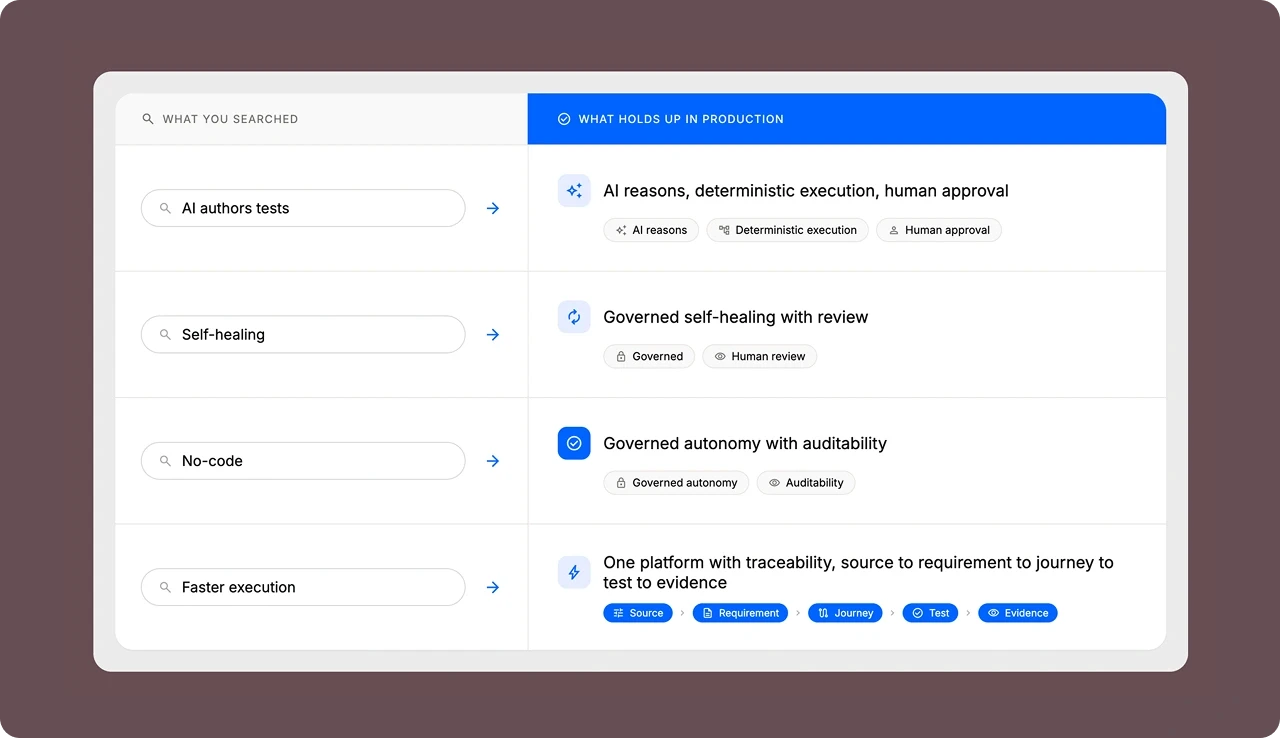
Virtuoso QA helps enterprise agile teams turn user stories, acceptance criteria and designs into testable coverage earlier in the delivery cycle. When sprint scope changes before release, Touchstone, our Agentic AI identifies the affected tests and proposes updates for review, keeping automation aligned with what is being built, approved and shipped.
" height="10.182000000000016px" id="C361dJxCp" width="11.692999999999984px"/></svg>)
Agile Test Automation for Sprint Scope That Changes Before Release
Virtuoso QA helps enterprise agile teams turn user stories, acceptance criteria and designs into testable coverage earlier in the delivery cycle. When sprint scope changes before release, Touchstone, our Agentic AI identifies the affected tests and proposes updates for review, keeping automation aligned with what is being built, approved and shipped.
Trusted where releases carry consequences












Trusted where releases carry consequences
Trusted where releases carry consequences
Trusted where releases carry consequences
Why Agile Test Automation Falls Behind
Agile teams do not fail to automate. They fail to automate early enough. Scripted automation usually starts when the build is available, and by then the sprint is already moving towards review, release or handover.
Automation depends on a finished build
Most scripted approaches need an application to point at before tests can be authored and stabilised. That leaves only the final part of the sprint for writing steps, debugging failures, preparing data and running the pack.

Mid-sprint changes break early coverage
Acceptance criteria can change after refinement, design review or stakeholder feedback. A script written against the earlier version of the story may now validate the wrong behaviour, forcing the team to rework the test or carry the gap into the next sprint.

Old tests block new coverage
Selector changes, identifier churn and failures from previous sprint coverage often appear during the current sprint. Time planned for new tests is spent triaging old journeys, while the gap between what ships and what is covered keeps widening.

Why Agile Test Automation Falls Behind
Agile teams do not fail to automate. They fail to automate early enough. Scripted automation usually starts when the build is available, and by then the sprint is already moving towards review, release or handover.
Automation depends on a finished build
Most scripted approaches need an application to point at before tests can be authored and stabilised. That leaves only the final part of the sprint for writing steps, debugging failures, preparing data and running the pack.
Mid-sprint changes break early coverage
Acceptance criteria can change after refinement, design review or stakeholder feedback. A script written against the earlier version of the story may now validate the wrong behaviour, forcing the team to rework the test or carry the gap into the next sprint.
Old tests block new coverage
Selector changes, identifier churn and failures from previous sprint coverage often appear during the current sprint. Time planned for new tests is spent triaging old journeys, while the gap between what ships and what is covered keeps widening.
How Virtuoso QA Moves Testing Into the Sprint
Virtuoso QA moves testing closer to the point where the team agrees what is being built, instead of waiting until the build is finished.

Plan: Start from stories, not a finished build
Upload user stories, acceptance criteria, designs and specifications to a project Knowledge Base. Touchstone turns them into source-linked requirements, so unclear acceptance criteria can be found during refinement instead of during test creation at the end of the sprint.

Design: Prepare the test journey before the application is ready
From an approved requirement, Touchstone proposes the journey steps, checks and test data needed to validate the story. This means the test design can be ready while development is still in progress.

Author: Write tests in plain English
Tests are written as readable steps, so testers, business analysts and product owners can review them without relying on an automation engineer. Autopilot builds the approved journey against the application and shows its reasoning for review.

Absorb: Update tests when sprint scope changes
When acceptance criteria change, Touchstone tracks the new version and flags the journeys affected by it. Updates are proposed as editable changes, so the team can review them instead of rewriting the test from the beginning.

Execute: Run tests during the sprint
Approved journeys run in parallel through Virtuoso QA’s execution engine, triggered by each commit, pull request or nightly build. Feedback reaches the team while the sprint is still active.

Maintain: Reduce rework from older tests
Common element changes can be repaired during execution and recorded for review. This helps prevent old test failures from taking time away from the new work being delivered.
How Virtuoso QA Moves Testing Into the Sprint
Virtuoso QA moves testing closer to the point where the team agrees what is being built, instead of waiting until the build is finished.
Plan: Start from stories, not a finished build
Upload user stories, acceptance criteria, designs and specifications to a project Knowledge Base. Touchstone turns them into source-linked requirements, so unclear acceptance criteria can be found during refinement instead of during test creation at the end of the sprint.
Design: Prepare the test journey before the application is ready
From an approved requirement, Touchstone proposes the journey steps, checks and test data needed to validate the story. This means the test design can be ready while development is still in progress.
Author: Write tests in plain English
Tests are written as readable steps, so testers, business analysts and product owners can review them without relying on an automation engineer. Autopilot builds the approved journey against the application and shows its reasoning for review.
Absorb: Update tests when sprint scope changes
When acceptance criteria change, Touchstone tracks the new version and flags the journeys affected by it. Updates are proposed as editable changes, so the team can review them instead of rewriting the test from the beginning.
Execute: Run tests during the sprint
Approved journeys run in parallel through Virtuoso QA’s execution engine, triggered by each commit, pull request or nightly build. Feedback reaches the team while the sprint is still active.
Maintain: Reduce rework from older tests
Common element changes can be repaired during execution and recorded for review. This helps prevent old test failures from taking time away from the new work being delivered.
Touchstone: Governed Agentic Testing for Agile Teams
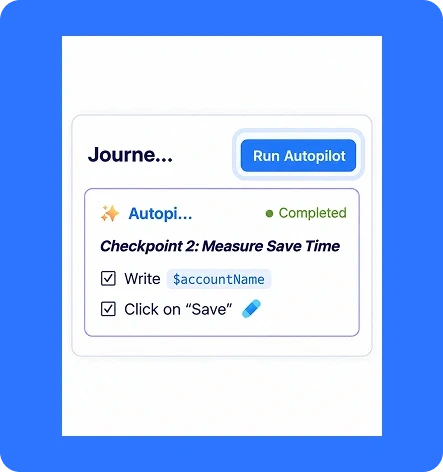
Touchstone is Virtuoso QA's agentic layer. Upload stories, acceptance criteria and designs, and its agents generate traceable requirements and propose the journeys needed to cover them, each citing the source behind it. Autopilot builds approved journeys in a real browser, and Virtuoso QA's deterministic engine runs them in your pipeline. When a story is revised or a requirement edited mid-sprint, Touchstone identifies the journeys affected and proposes updates as reviewable diffs. Human approval controls what enters the suite, and every change, decision, repair and execution is recorded.
Touchstone: Governed Agentic Testing for Agile Teams
Touchstone is Virtuoso QA's agentic layer. Upload stories, acceptance criteria and designs, and its agents generate traceable requirements and propose the journeys needed to cover them, each citing the source behind it. Autopilot builds approved journeys in a real browser, and Virtuoso QA's deterministic engine runs them in your pipeline. When a story is revised or a requirement edited mid-sprint, Touchstone identifies the journeys affected and proposes updates as reviewable diffs. Human approval controls what enters the suite, and every change, decision, repair and execution is recorded.
Connect Agile Testing Across the Delivery Cycle
Virtuoso QA gives one governed workflow from refinement through to the release.

Refinement and planning
Stories, acceptance criteria, designs and specifications turned into source-cited requirements, so untestable or ambiguous criteria are visible before they reach a sprint board.
In-sprint authoring and review
Plain-English journeys authored and reviewed by testers, analysts and product owners, with shared checkpoints, data tables and environments carried across sprints instead of rebuilt.

Continuous integration and feedback
Execution triggered per commit, per pull request or nightly, running in parallel across browsers, environments and datasets, with failures routed to your tracker with the run evidence attached.

Regression across sprints and releases
The coverage built this sprint joining the pack that runs on every subsequent one, with changed requirements flagging the journeys built on them rather than the suite drifting quietly.
Connect Agile Testing Across the Delivery Cycle
Virtuoso QA gives one governed workflow from refinement through to the release.
Refinement and planning
Stories, acceptance criteria, designs and specifications turned into source-cited requirements, so untestable or ambiguous criteria are visible before they reach a sprint board.
In-sprint authoring and review
Plain-English journeys authored and reviewed by testers, analysts and product owners, with shared checkpoints, data tables and environments carried across sprints instead of rebuilt.
Continuous integration and feedback
Execution triggered per commit, per pull request or nightly, running in parallel across browsers, environments and datasets, with failures routed to your tracker with the run evidence attached.
Regression across sprints and releases
The coverage built this sprint joining the pack that runs on every subsequent one, with changed requirements flagging the journeys built on them rather than the suite drifting quietly.
Build Agile Coverage from What the Team Already Produces
Nothing has to be created specially to start. The stories, acceptance criteria and designs the team writes each sprint become the sources Touchstone generates from, and existing checkpoints, data tables and environments are referenced before anything new is built. A journey such as "add an item to the basket, apply the member discount, check the total updates and the discount appears on the order summary" is readable by the product owner who wrote the criteria and the tester who will run it. Nothing is lost translating one into the other.
What Agile Test Automation Teams Gain with Virtuoso QA
Virtuoso QA moves test creation earlier in the sprint, keeps coverage moving when the story changes, and opens authoring to everyone who has a view on whether the test matches the story.
Testing starts at refinement
Automation often slips to the next sprint because teams wait for a working build before creating tests. Virtuoso QA builds requirements and journey structures from stories, acceptance criteria and designs earlier in the sprint, so less work is left when the build arrives.

Sprint changes are easier to manage
Revised acceptance criteria are normal in an agile team and expensive in a scripted suite. Touchstone identifies which journeys are affected and proposes updates for review, so coverage adjusts without the test being rewritten from the beginning.

More of the team can contribute
Plain English journeys are readable by product owners, business analysts and testers, so the team can confirm that a test matches the story before it enters the sprint or the regression pack.
Feedback lands inside the sprint
Approved journeys trigger from each commit, pull request or nightly build and run in parallel, so a broken story surfaces while the work is still open rather than in the next sprint's regression pass.
What Agile Test Automation Teams Gain with Virtuoso QA
Virtuoso QA moves test creation earlier in the sprint, keeps coverage moving when the story changes, and opens authoring to everyone who has a view on whether the test matches the story.
Testing starts at refinement
Automation often slips to the next sprint because teams wait for a working build before creating tests. Virtuoso QA builds requirements and journey structures from stories, acceptance criteria and designs earlier in the sprint, so less work is left when the build arrives.
Sprint changes are easier to manage
Revised acceptance criteria are normal in an agile team and expensive in a scripted suite. Touchstone identifies which journeys are affected and proposes updates for review, so coverage adjusts without the test being rewritten from the beginning.
More of the team can contribute
Plain English journeys are readable by product owners, business analysts and testers, so the team can confirm that a test matches the story before it enters the sprint or the regression pack.
Feedback lands inside the sprint
Approved journeys trigger from each commit, pull request or nightly build and run in parallel, so a broken story surfaces while the work is still open rather than in the next sprint's regression pass.
Explore Related Virtuoso QA Solutions
Open authoring beyond the automation team
Create and maintain readable journeys in plain English, so analysts, testers and product owners can contribute coverage directly.
Build coverage from your documentation
Touchstone turns stories, acceptance criteria and specifications into source-cited requirements and proposed journeys, with review before anything enters the suite.
Explore Related Virtuoso QA Solutions
Open authoring beyond the automation team
Create and maintain readable journeys in plain English, so analysts, testers and product owners can contribute coverage directly.
Build coverage from your documentation
Touchstone turns stories, acceptance criteria and specifications into source-cited requirements and proposed journeys, with review before anything enters the suite.
Al-native, proven in production.
10x
Faster execution
9x
Faster authoring
85%
Less maintenance
50%
Lower QA cost
Al-native, proven in production.
10x
Faster execution
9x
Faster authoring
85%
Less maintenance
50%
Lower QA cost
Al-native, proven in production.
10x
Faster execution
9x
Faster authoring
85%
Less maintenance
50%
Lower QA cost
Proven where quality and accountability matter
Recognized by independent analysts, trusted by enterprise teams, and built with the security controls required for critical software.

WAVE STRONG PERFORMER
Proven where quality and accountability matter
Recognized by independent analysts, trusted by enterprise teams, and built with the security controls required for critical software.
WAVE STRONG PERFORMER
Proven where quality and accountability matter
Recognized by independent analysts, trusted by enterprise teams, and built with the security controls required for critical software.
WAVE STRONG PERFORMER
Frequently Asked Questions
How Virtuoso QA works inside a sprint, from generating requirements before the build exists to keeping last sprint's tests out of this sprint's capacity.
Can we really start testing before the application is built?
What happens when acceptance criteria change mid-sprint?
Can it run on every pull request without slowing the pipeline?
Who on the team owns the coverage?
Does an agent decide whether our story is done?

See what your next release looks like with Virtuoso
Book a walkthrough on your applications and your workflows. Bring a requirement, a user journey, or a brittle Selenium script, and watch the loop run on something you recognise.
See what your next release looks like with Virtuoso
Book a walkthrough on your applications and your workflows. Bring a requirement, a user journey, or a brittle Selenium script, and watch the loop run on something you recognise.
See what your next release looks like with Virtuoso
Book a walkthrough on your applications and your workflows. Bring a requirement, a user journey, or a brittle Selenium script, and watch the loop run on something you recognise.

Trust Center
AICPA
SOC

WAVE STRONG PERFORMER


@ Copyright 2026 SpotQA, Creators of Virtuoso QA
Trust Center
AICPA
SOC
WAVE STRONG PERFORMER
@ Copyright 2026 SpotQA, Creators of Virtuoso QA
Trust Center
AICPA
SOC
WAVE STRONG PERFORMER
@ Copyright 2026 SpotQA, Creators of Virtuoso QA