Govern AI-Generated Test Coverage Without Slowing Delivery
AI is increasing the volume and pace of test creation, but QA leaders remain accountable for what enters the suite and what supports each release decision. Touchstone, Virtuoso QA’s agentic testing capability, introduces human approval at key stages and preserves the requirements, changes, approvals and execution evidence behind your coverage.
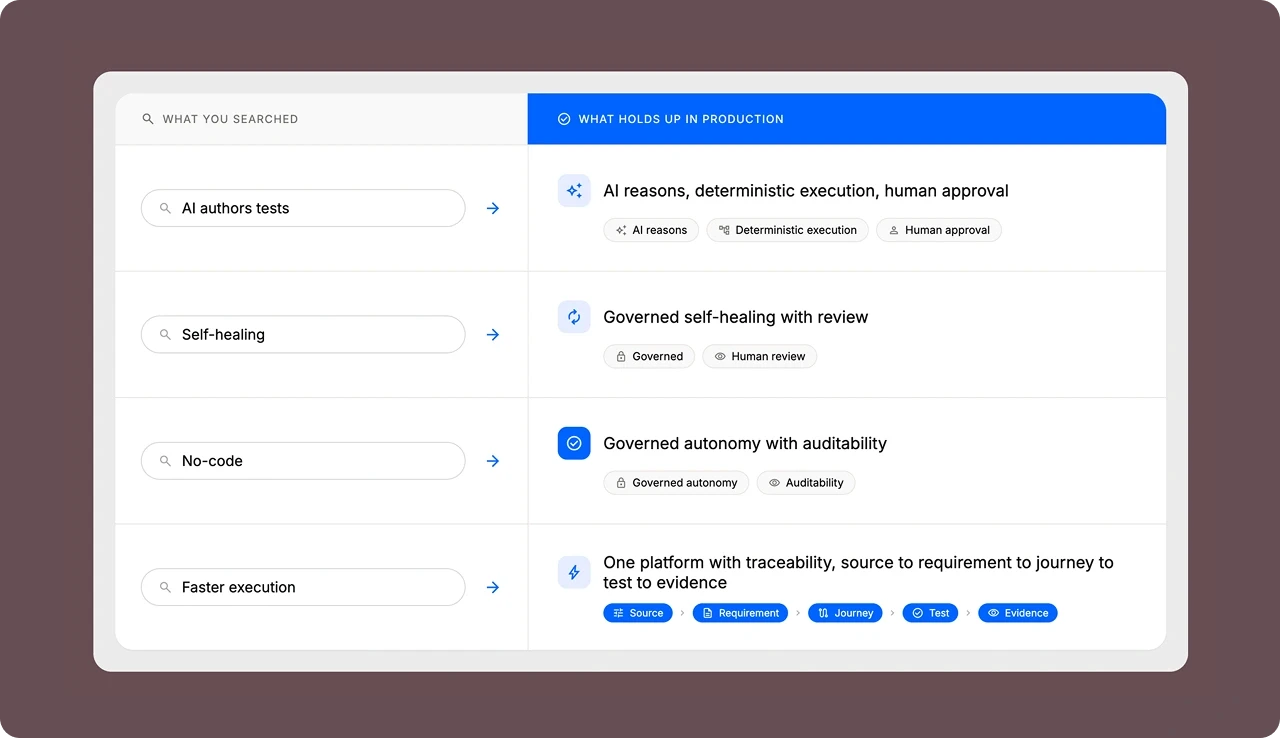
Govern AI-Generated Test Coverage Without Slowing Delivery
AI is increasing the volume and pace of test creation, but QA leaders remain accountable for what enters the suite and what supports each release decision. Touchstone, Virtuoso QA’s agentic testing capability, introduces human approval at key stages and preserves the requirements, changes, approvals and execution evidence behind your coverage.
Trusted where releases carry consequences











Trusted where releases carry consequences
Trusted where releases carry consequences
Trusted where releases carry consequences
What AI-Generated Coverage Asks of a QA Manager
More tests arrive, more changes need approving, and more evidence has to be assembled before release.
Review becomes a release bottleneck
Generated tests arrive faster than the team can evaluate their intent, assertions and risk, so approval turns into a procedural step rather than a quality decision.

Coverage loses its context
Tests created from prompts or isolated scripts arrive without a traceable link to the requirement they verify, so nobody can say whether current business behaviour is covered.

Release decisions lack evidence
Pass rates alone cannot show which requirements were tested, which version of a journey ran or who approved its latest change. That context sits across tools and spreadsheets and has to be reconstructed before a release is approved.

What AI-Generated Coverage Asks of a QA Manager
More tests arrive, more changes need approving, and more evidence has to be assembled before release.
Review becomes a release bottleneck
Generated tests arrive faster than the team can evaluate their intent, assertions and risk, so approval turns into a procedural step rather than a quality decision.
Coverage loses its context
Tests created from prompts or isolated scripts arrive without a traceable link to the requirement they verify, so nobody can say whether current business behaviour is covered.
Release decisions lack evidence
Pass rates alone cannot show which requirements were tested, which version of a journey ran or who approved its latest change. That context sits across tools and spreadsheets and has to be reconstructed before a release is approved.
Turn Your QA Standards into a Governed Workflow with Virtuoso QA
Virtuoso QA helps QA managers apply consistent standards across every project, retain control over AI-generated coverage and preserve the evidence behind each release decision.

Standardise: Apply your QA conventions consistently
Define naming conventions, requirement formats, business rules and domain expectations through Agentic Directives. Apply them across the organisation or tailor them to individual projects.

Trace: Connect coverage to its source
Touchstone generates source-cited requirements from the specifications and policies in your Knowledge Base. Each journey remains linked to the requirement version it validates, so you can see what every test is intended to prove.

Assess: Understand the effect of change
When requirements are revised, Touchstone identifies the journeys built on them and highlights the coverage that may need attention. Your team can review the impact before it emerges as a failed test or a release gap.

Approve: Control what enters the suite
Review, edit, approve or reject proposed requirements, journey structures and repairs. Human approval remains part of the workflow before consequential changes become part of the test suite.

Execute: Produce consistent results
Run approved journeys on Virtuoso QA’s deterministic engine across browsers, environments and datasets. Agentic AI proposes the coverage, while defined test steps determine the result.

Record: Retain evidence for every release
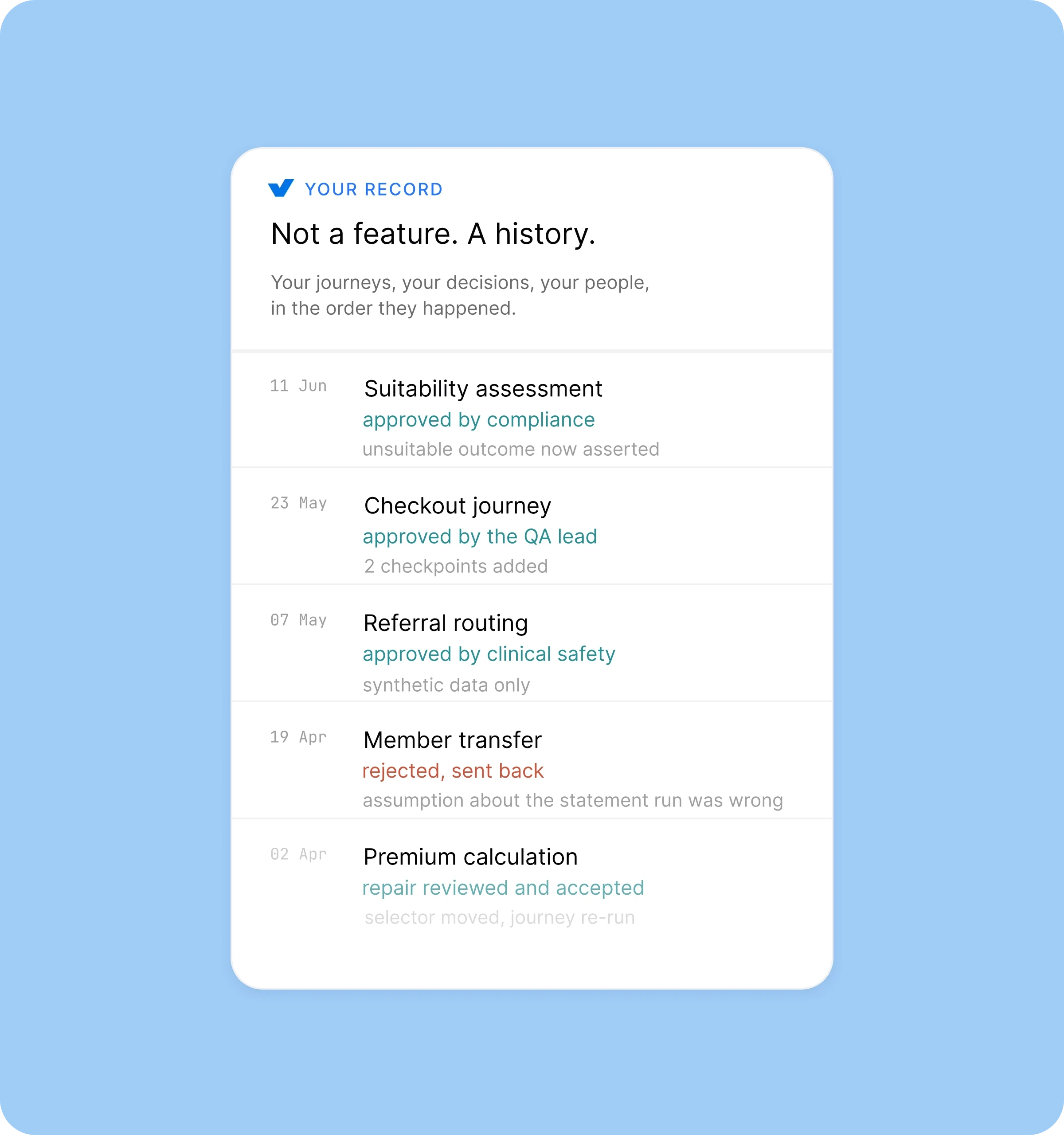
Preserve requirement versions, approved changes and execution results in one traceable workflow. Screenshots, logs and step-level evidence provide the context needed for release reviews and audits.
Turn Your QA Standards into a Governed Workflow with Virtuoso QA
Virtuoso QA helps QA managers apply consistent standards across every project, retain control over AI-generated coverage and preserve the evidence behind each release decision.
Standardise: Apply your QA conventions consistently
Define naming conventions, requirement formats, business rules and domain expectations through Agentic Directives. Apply them across the organisation or tailor them to individual projects.
Trace: Connect coverage to its source
Touchstone generates source-cited requirements from the specifications and policies in your Knowledge Base. Each journey remains linked to the requirement version it validates, so you can see what every test is intended to prove.
Assess: Understand the effect of change
When requirements are revised, Touchstone identifies the journeys built on them and highlights the coverage that may need attention. Your team can review the impact before it emerges as a failed test or a release gap.
Approve: Control what enters the suite
Review, edit, approve or reject proposed requirements, journey structures and repairs. Human approval remains part of the workflow before consequential changes become part of the test suite.
Execute: Produce consistent results
Run approved journeys on Virtuoso QA’s deterministic engine across browsers, environments and datasets. Agentic AI proposes the coverage, while defined test steps determine the result.
Record: Retain evidence for every release
Preserve requirement versions, approved changes and execution results in one traceable workflow. Screenshots, logs and step-level evidence provide the context needed for release reviews and audits.
Put Specialised Agents to Work Under Human Oversight
Touchstone’s specialised agents handle requirements analysis, journey design and browser authoring. Your team reviews the output at each key stage, giving QA managers clear oversight of how AI-generated coverage reaches the suite.
" height="10.182000000000016px" id="C361dJxCp" width="11.692999999999984px"/></svg>)
The Analyst
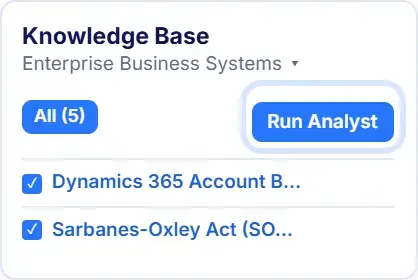
The Analyst generates structured, source-cited requirements from specifications, policies and other documents in your Knowledge Base. Your team can clarify ambiguous behaviour before it becomes an assumption within the test suite.
The Architect
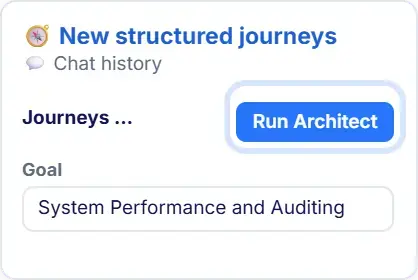
The Architect proposes the journey structure, validations and data scenarios needed to verify each requirement. It references existing checkpoints, data tables and environments, helping teams apply shared assets consistently across projects.
The Autopilot
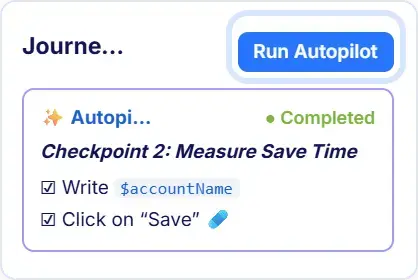
Autopilot implements the approved structure against the live application and validates the resulting steps. Reviewers can inspect its progress, correct the implementation and approve the journey before it enters the governed test suite.
Put Specialised Agents to Work Under Human Oversight
Touchstone’s specialised agents handle requirements analysis, journey design and browser authoring. Your team reviews the output at each key stage, giving QA managers clear oversight of how AI-generated coverage reaches the suite.
The Analyst
The Analyst generates structured, source-cited requirements from specifications, policies and other documents in your Knowledge Base. Your team can clarify ambiguous behaviour before it becomes an assumption within the test suite.
The Architect
The Architect proposes the journey structure, validations and data scenarios needed to verify each requirement. It references existing checkpoints, data tables and environments, helping teams apply shared assets consistently across projects.
The Autopilot
Autopilot implements the approved structure against the live application and validates the resulting steps. Reviewers can inspect its progress, correct the implementation and approve the journey before it enters the governed test suite.
Apply the Same Standards Across Applications and Teams
Apply one set of standards, one review workflow and one traceable history across applications, teams and business-critical processes.

Regulated and audited workflows
Use policies, standards and regulatory documents in the Knowledge Base as source material for testable requirements. Each generated requirement cites its source, helping teams preserve traceability from obligation to executed coverage.

Packaged enterprise applications
Maintain coverage across Salesforce, SAP, Dynamics 365, Workday, Oracle and ServiceNow as vendor-managed release cycles introduce changes outside your team’s control.

Multi-team application estates
Manage shared checkpoints, data tables and environments centrally. Agentic Directives apply common conventions during generation, helping teams create coverage to the same standards across projects.

Connected systems and data layers
Combine UI interactions, API calls and database checks in a single journey to verify complete business outcomes, including the records created behind the interface.
Apply the Same Standards Across Applications and Teams
Apply one set of standards, one review workflow and one traceable history across applications, teams and business-critical processes.
Regulated and audited workflows
Use policies, standards and regulatory documents in the Knowledge Base as source material for testable requirements. Each generated requirement cites its source, helping teams preserve traceability from obligation to executed coverage.
Packaged enterprise applications
Maintain coverage across Salesforce, SAP, Dynamics 365, Workday, Oracle and ServiceNow as vendor-managed release cycles introduce changes outside your team’s control.
Multi-team application estates
Manage shared checkpoints, data tables and environments centrally. Agentic Directives apply common conventions during generation, helping teams create coverage to the same standards across projects.
Connected systems and data layers
Combine UI interactions, API calls and database checks in a single journey to verify complete business outcomes, including the records created behind the interface.
What QA Managers Achieve with Virtuoso QA
Move from relying on test counts and pass rates to a traceable record of what was tested, why it was tested and how each change was approved.
Coverage connects to business requirements
Measure coverage against source-cited requirements rather than the number of tests created. Each journey shows the approved behaviour it is intended to verify.
Standards apply during generation
Agentic Directives bring your naming conventions, business rules and templates into generated requirements and journeys, reducing the need to correct them during review.

Change impact becomes visible
When requirements change, Touchstone identifies the journeys that may be affected and proposes updates for review before gaps surface during release testing.

Release decisions have supporting evidence
Requirement versions, approvals and execution results provide a clear record of what was tested. Screenshots, logs and step-level results add context to each run.
What QA Managers Achieve with Virtuoso QA
Move from relying on test counts and pass rates to a traceable record of what was tested, why it was tested and how each change was approved.
Coverage connects to business requirements
Measure coverage against source-cited requirements rather than the number of tests created. Each journey shows the approved behaviour it is intended to verify.
Standards apply during generation
Agentic Directives bring your naming conventions, business rules and templates into generated requirements and journeys, reducing the need to correct them during review.
Change impact becomes visible
When requirements change, Touchstone identifies the journeys that may be affected and proposes updates for review before gaps surface during release testing.
Release decisions have supporting evidence
Requirement versions, approvals and execution results provide a clear record of what was tested. Screenshots, logs and step-level results add context to each run.
Manual Governance vs AI-Generated Automation vs Virtuoso QA
Manual governance depends on the people available to write and review. AI generation depends on the prompt. Virtuoso QA generates from requirements traced to your own specifications, applies your standards during generation, and records who approved each change.

What shapes the coverage
Manual governance depends on what the team has capacity to write and review. AI generation produces what the model can write from a prompt. With Virtuoso QA, coverage is generated from requirements traced to your own specifications.
How standards are enforced
Manual governance relies on reviewers catching violations after the fact. Generated automation depends on whoever controls the prompts. Virtuoso QA applies directives your team authors and edits in plain language during generation.
What a specification change triggers
Manual governance means a delayed cycle while someone works out the impact. Generated automation means regenerating and re-reading the output. Virtuoso QA identifies the affected requirements and journeys and proposes updates as diffs.

How coverage expands
Manual governance expands coverage by adding people. Generated automation expands it by adding prompts, which is not the same as adding verified behaviour. Virtuoso QA expands it by linking more requirements to journeys.

What a failure produces
Manual governance produces a description and a ticket. Generated automation produces a stack trace. Virtuoso QA captures screenshots, logs and the affected functional area as the run happens, so investigation starts from what was recorded.
What release reporting rests on
Manual governance rests on a spreadsheet. Generated automation rests on a test count. Virtuoso QA rests on the chain from source to requirement to journey to run, with the approver recorded at each accepted change.
Manual Governance vs AI-Generated Automation vs Virtuoso QA
Manual governance depends on the people available to write and review. AI generation depends on the prompt. Virtuoso QA generates from requirements traced to your own specifications, applies your standards during generation, and records who approved each change.
What shapes the coverage
Manual governance depends on what the team has capacity to write and review. AI generation produces what the model can write from a prompt. With Virtuoso QA, coverage is generated from requirements traced to your own specifications.
How standards are enforced
Manual governance relies on reviewers catching violations after the fact. Generated automation depends on whoever controls the prompts. Virtuoso QA applies directives your team authors and edits in plain language during generation.
What a specification change triggers
Manual governance means a delayed cycle while someone works out the impact. Generated automation means regenerating and re-reading the output. Virtuoso QA identifies the affected requirements and journeys and proposes updates as diffs.
How coverage expands
Manual governance expands coverage by adding people. Generated automation expands it by adding prompts, which is not the same as adding verified behaviour. Virtuoso QA expands it by linking more requirements to journeys.
What a failure produces
Manual governance produces a description and a ticket. Generated automation produces a stack trace. Virtuoso QA captures screenshots, logs and the affected functional area as the run happens, so investigation starts from what was recorded.
What release reporting rests on
Manual governance rests on a spreadsheet. Generated automation rests on a test count. Virtuoso QA rests on the chain from source to requirement to journey to run, with the approver recorded at each accepted change.
Extend Governance Across the Testing Lifecycle
Build coverage from your documentation
Turn specifications, stories and policies into source-cited requirements and proposed journeys, with human review before anything enters the suite.
Validate complete business processes
Combine UI interactions, API calls and database checks in one journey to verify outcomes across connected systems.
Extend Governance Across the Testing Lifecycle
Build coverage from your documentation
Turn specifications, stories and policies into source-cited requirements and proposed journeys, with human review before anything enters the suite.
Validate complete business processes
Combine UI interactions, API calls and database checks in one journey to verify outcomes across connected systems.
AI-native, proven in production.
10x
Faster execution
9x
Faster authoring
85%
Less maintenance
50%
Lower QA cost
AI-native, proven in production.
10x
Faster execution
9x
Faster authoring
85%
Less maintenance
50%
Lower QA cost
AI-native, proven in production.
10x
Faster execution
9x
Faster authoring
85%
Less maintenance
50%
Lower QA cost
Proven where quality and accountability matter
Recognised by independent analysts, trusted by enterprise teams, and built with the security controls required for critical software.

WAVE STRONG PERFORMER
Proven where quality and accountability matter
Recognised by independent analysts, trusted by enterprise teams, and built with the security controls required for critical software.
WAVE STRONG PERFORMER
Proven where quality and accountability matter
Recognised by independent analysts, trusted by enterprise teams, and built with the security controls required for critical software.
WAVE STRONG PERFORMER
Frequently Asked Questions
How Virtuoso QA governs AI-generated coverage in practice, from the standards applied during generation to the record left behind each release.
How do I know my team is actually reviewing what Touchstone proposes rather than clicking through it?
Can I encode our internal QA standards so they apply to everything generated?
How does the platform handle a specification change that affects several teams and many assets?
What does coverage mean in Virtuoso QA, and how do we report on it?
What is the approval process when Autopilot builds or repairs a journey?

See what your next release looks like with Virtuoso
Book a walkthrough on your applications and your workflows. Bring a requirement, a user journey, or a brittle Selenium script, and watch the loop run on something you recognise.
See what your next release looks like with Virtuoso
Book a walkthrough on your applications and your workflows. Bring a requirement, a user journey, or a brittle Selenium script, and watch the loop run on something you recognise.
See what your next release looks like with Virtuoso
Book a walkthrough on your applications and your workflows. Bring a requirement, a user journey, or a brittle Selenium script, and watch the loop run on something you recognise.

Trust Center
AICPA
SOC

WAVE STRONG PERFORMER


@ Copyright 2026 SpotQA, Creators of Virtuoso QA
Trust Center
AICPA
SOC
WAVE STRONG PERFORMER
@ Copyright 2026 SpotQA, Creators of Virtuoso QA
Trust Center
AICPA
SOC
WAVE STRONG PERFORMER
@ Copyright 2026 SpotQA, Creators of Virtuoso QA