Cloud-Native Test Execution That Scales Without Managing Infrastructure
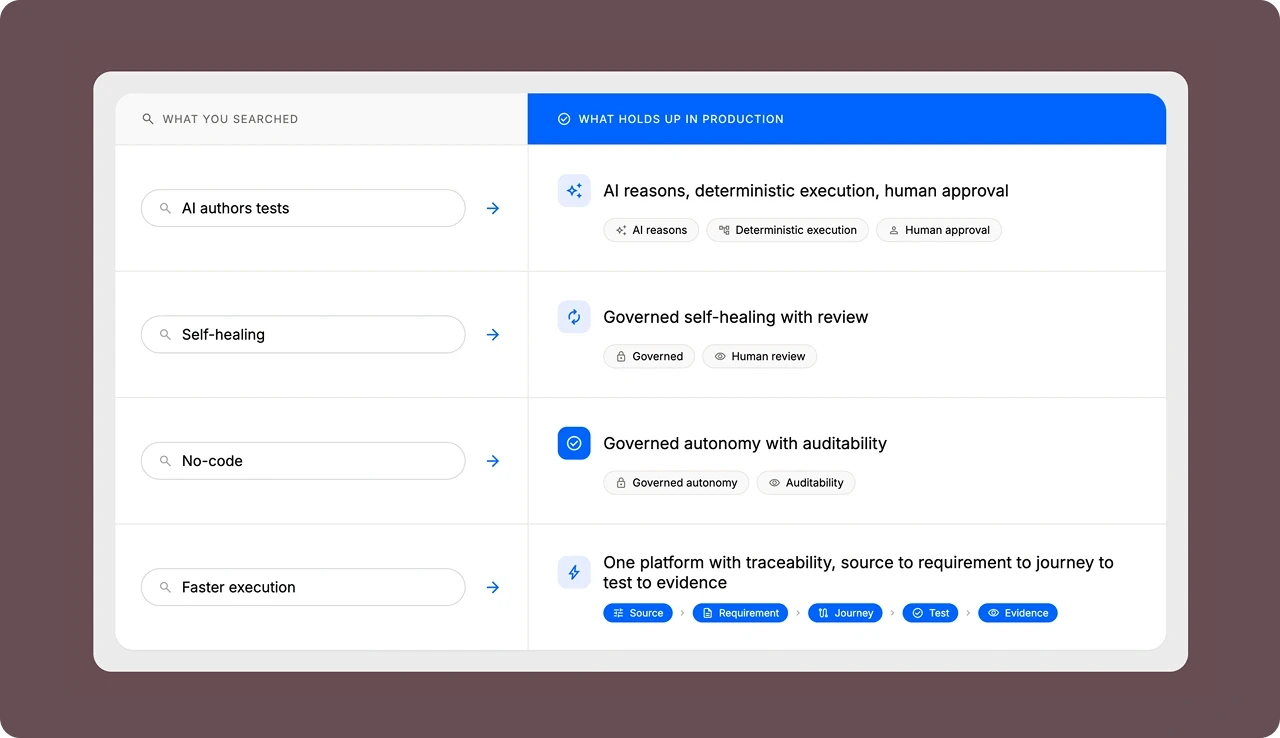
Test Automation should not require you to manage the infrastructure behind it. Virtuoso QA executes approved journeys on managed infrastructure, in parallel, across the browsers, environments and datasets you select per run. Execution is deterministic, so the same journey against the same build returns the same result.
Cloud-Native Test Execution That Scales Without Managing Infrastructure
Test Automation should not require you to manage the infrastructure behind it. Virtuoso QA executes approved journeys on managed infrastructure, in parallel, across the browsers, environments and datasets you select per run. Execution is deterministic, so the same journey against the same build returns the same result.
Cloud-Native Test Execution That Scales Without Managing Infrastructure
Test Automation should not require you to manage the infrastructure behind it. Virtuoso QA executes approved journeys on managed infrastructure, in parallel, across the browsers, environments and datasets you select per run. Execution is deterministic, so the same journey against the same build returns the same result.
Used by the world's leading companies












Used by the world's leading companies
Used by the world's leading companies
Used by the world's leading companies
When Test Execution Becomes the Release Constraint
The suite is rarely the constraint. Running it reliably, frequently and across every required environment usually is.
Self-Hosted Grids Create Ongoing Overhead
Nodes, browser versions, driver compatibility and capacity all require ongoing management. Patching, monitoring and troubleshooting the grid become permanent engineering responsibilities that add no test coverage.

Limited Concurrency Puts Coverage Under Pressure
Suite duration depends on how many tests can run concurrently. As coverage grows, teams are forced to balance release timelines against execution capacity, often leaving part of the suite unverified.

Unreliable Results Reduce Confidence
Environment drift, timing variance and shared-state issues can create failures unrelated to the application. Repeated re-runs add investigation time and make genuine failures harder to distinguish from execution noise.

When Test Execution Becomes the Release Constraint
The suite is rarely the constraint. Running it reliably, frequently and across every required environment usually is.
Self-Hosted Grids Create Ongoing Overhead
Nodes, browser versions, driver compatibility and capacity all require ongoing management. Patching, monitoring and troubleshooting the grid become permanent engineering responsibilities that add no test coverage.
Limited Concurrency Puts Coverage Under Pressure
Suite duration depends on how many tests can run concurrently. As coverage grows, teams are forced to balance release timelines against execution capacity, often leaving part of the suite unverified.
Unreliable Results Reduce Confidence
Environment drift, timing variance and shared-state issues can create failures unrelated to the application. Repeated re-runs add investigation time and make genuine failures harder to distinguish from execution noise.
When Test Execution Becomes the Release Constraint
The suite is rarely the constraint. Running it reliably, frequently and across every required environment usually is.
Self-Hosted Grids Create Ongoing Overhead
Nodes, browser versions, driver compatibility and capacity all require ongoing management. Patching, monitoring and troubleshooting the grid become permanent engineering responsibilities that add no test coverage.
Limited Concurrency Puts Coverage Under Pressure
Suite duration depends on how many tests can run concurrently. As coverage grows, teams are forced to balance release timelines against execution capacity, often leaving part of the suite unverified.
Unreliable Results Reduce Confidence
Environment drift, timing variance and shared-state issues can create failures unrelated to the application. Repeated re-runs add investigation time and make genuine failures harder to distinguish from execution noise.
How Virtuoso QA Delivers Controlled, Scalable Test Execution
Virtuoso QA separates creating test coverage from executing it, so the engine runs a fixed, approved artefact rather than interpreting or generating tests at runtime. That gives teams a controlled foundation for running at scale.

Deterministic execution from an approved artefact
Published journeys run exactly as defined, using standard steps and ordered checkpoints. Nothing is generated at runtime and no model influences the result. AI proposes, a person approves, and the engine runs what was accepted.

Managed infrastructure with parallel execution
There is no grid to provision, no browser versions to maintain and no idle capacity to manage. Journeys run concurrently, including across browsers, so large suites complete inside a release window.

One approved journey across environments and datasets
Browsers, configurations and environments are selected at execution time, with base URLs and credentials held as environment variables. The same journey runs across multiple datasets from its data table rather than as duplicates that drift apart.

Execution across your delivery workflow
Journeys run on demand, from a CI/CD pipeline, on a schedule, or through orchestration that executes a defined suite as a unit. Scheduled runs also catch changes outside source control, including platform updates and administrative configuration.

Evidence captured with every execution
Every run captures screenshots, logs and step-level detail, retained in journey history and contributing to journey health. Failures route to Jira, Xray or TestRail with the supporting evidence attached.

The same result every time it runs
A journey executed against the same build and environment returns the same verdict, so a red result means the application changed rather than the run behaving differently. That is what makes a failure worth investigating instead of re-running.
How Virtuoso QA Delivers Controlled, Scalable Test Execution
Virtuoso QA separates creating test coverage from executing it, so the engine runs a fixed, approved artefact rather than interpreting or generating tests at runtime. That gives teams a controlled foundation for running at scale.
Deterministic execution from an approved artefact
Published journeys run exactly as defined, using standard steps and ordered checkpoints. Nothing is generated at runtime and no model influences the result. AI proposes, a person approves, and the engine runs what was accepted.
Managed infrastructure with parallel execution
There is no grid to provision, no browser versions to maintain and no idle capacity to manage. Journeys run concurrently, including across browsers, so large suites complete inside a release window.
One approved journey across environments and datasets
Browsers, configurations and environments are selected at execution time, with base URLs and credentials held as environment variables. The same journey runs across multiple datasets from its data table rather than as duplicates that drift apart.
Execution across your delivery workflow
Journeys run on demand, from a CI/CD pipeline, on a schedule, or through orchestration that executes a defined suite as a unit. Scheduled runs also catch changes outside source control, including platform updates and administrative configuration.
Evidence captured with every execution
Every run captures screenshots, logs and step-level detail, retained in journey history and contributing to journey health. Failures route to Jira, Xray or TestRail with the supporting evidence attached.
The same result every time it runs
A journey executed against the same build and environment returns the same verdict, so a red result means the application changed rather than the run behaving differently. That is what makes a failure worth investigating instead of re-running.
How Virtuoso QA Delivers Controlled, Scalable Test Execution
Virtuoso QA separates creating test coverage from executing it, so the engine runs a fixed, approved artefact rather than interpreting or generating tests at runtime. That gives teams a controlled foundation for running at scale.
Deterministic execution from an approved artefact
Published journeys run exactly as defined, using standard steps and ordered checkpoints. Nothing is generated at runtime and no model influences the result. AI proposes, a person approves, and the engine runs what was accepted.
Managed infrastructure with parallel execution
There is no grid to provision, no browser versions to maintain and no idle capacity to manage. Journeys run concurrently, including across browsers, so large suites complete inside a release window.
One approved journey across environments and datasets
Browsers, configurations and environments are selected at execution time, with base URLs and credentials held as environment variables. The same journey runs across multiple datasets from its data table rather than as duplicates that drift apart.
Execution across your delivery workflow
Journeys run on demand, from a CI/CD pipeline, on a schedule, or through orchestration that executes a defined suite as a unit. Scheduled runs also catch changes outside source control, including platform updates and administrative configuration.
Evidence captured with every execution
Every run captures screenshots, logs and step-level detail, retained in journey history and contributing to journey health. Failures route to Jira, Xray or TestRail with the supporting evidence attached.
The same result every time it runs
A journey executed against the same build and environment returns the same verdict, so a red result means the application changed rather than the run behaving differently. That is what makes a failure worth investigating instead of re-running.
Impact of Scalable Test Execution with Virtuoso QA
Virtuoso QA removes the infrastructure your team would otherwise maintain, runs coverage in parallel so the suite fits the release window, and produces results a release decision can rest on.

Infrastructure Stops Being a Testing Dependency
Eliminate the ongoing effort of building, patching and capacity-planning test grids. Execution infrastructure becomes a managed platform capability rather than a permanent engineering responsibility.

Coverage Scales Without Extending Release Windows
Parallel execution allows teams to expand coverage without proportionally increasing execution time. Release decisions are driven by coverage and risk, not infrastructure capacity.
Execution Results Become Release-Grade Evidence
Deterministic execution makes failures meaningful. Teams can treat an unexpected result as actionable evidence rather than spending time establishing whether the test or the application is at fault.

One Test Suite Across Every Environment
Keep environment-specific values outside the journey so the same approved test can run across staging, UAT and production without maintaining separate copies that can drift over time.
Impact of Scalable Test Execution with Virtuoso QA
Virtuoso QA removes the infrastructure your team would otherwise maintain, runs coverage in parallel so the suite fits the release window, and produces results a release decision can rest on.
Infrastructure Stops Being a Testing Dependency
Eliminate the ongoing effort of building, patching and capacity-planning test grids. Execution infrastructure becomes a managed platform capability rather than a permanent engineering responsibility.
Coverage Scales Without Extending Release Windows
Parallel execution allows teams to expand coverage without proportionally increasing execution time. Release decisions are driven by coverage and risk, not infrastructure capacity.
Execution Results Become Release-Grade Evidence
Deterministic execution makes failures meaningful. Teams can treat an unexpected result as actionable evidence rather than spending time establishing whether the test or the application is at fault.
One Test Suite Across Every Environment
Keep environment-specific values outside the journey so the same approved test can run across staging, UAT and production without maintaining separate copies that can drift over time.
Impact of Scalable Test Execution with Virtuoso QA
Virtuoso QA removes the infrastructure your team would otherwise maintain, runs coverage in parallel so the suite fits the release window, and produces results a release decision can rest on.
Infrastructure Stops Being a Testing Dependency
Eliminate the ongoing effort of building, patching and capacity-planning test grids. Execution infrastructure becomes a managed platform capability rather than a permanent engineering responsibility.
Coverage Scales Without Extending Release Windows
Parallel execution allows teams to expand coverage without proportionally increasing execution time. Release decisions are driven by coverage and risk, not infrastructure capacity.
Execution Results Become Release-Grade Evidence
Deterministic execution makes failures meaningful. Teams can treat an unexpected result as actionable evidence rather than spending time establishing whether the test or the application is at fault.
One Test Suite Across Every Environment
Keep environment-specific values outside the journey so the same approved test can run across staging, UAT and production without maintaining separate copies that can drift over time.
Impact of Scalable Test Execution with Virtuoso QA
Virtuoso QA removes the infrastructure your team would otherwise maintain, runs coverage in parallel so the suite fits the release window, and produces results a release decision can rest on.
Infrastructure Stops Being a Testing Dependency
Eliminate the ongoing effort of building, patching and capacity-planning test grids. Execution infrastructure becomes a managed platform capability rather than a permanent engineering responsibility.
Coverage Scales Without Extending Release Windows
Parallel execution allows teams to expand coverage without proportionally increasing execution time. Release decisions are driven by coverage and risk, not infrastructure capacity.
Execution Results Become Release-Grade Evidence
Deterministic execution makes failures meaningful. Teams can treat an unexpected result as actionable evidence rather than spending time establishing whether the test or the application is at fault.
One Test Suite Across Every Environment
Keep environment-specific values outside the journey so the same approved test can run across staging, UAT and production without maintaining separate copies that can drift over time.
Self-Hosted Grids vs. Cloud Testing Providers vs. Virtuoso QA
Virtuoso QA manages the execution infrastructure, keeps the agents out of the run, and produces a record your team can use rather than a log it has to interpret. What separates the three is who owns the infrastructure and what each execution leaves behind.

How execution capacity is provided
Self-hosted grids rely on infrastructure your team provisions and scales. Cloud providers offer managed capacity, usually priced by concurrent session. Virtuoso QA includes managed parallel execution in the platform.

Where AI sits in the execution lifecycle
Self-hosted grids include none. Some cloud platforms run agents across authoring, execution and analysis. Virtuoso QA keeps agents out of the execution path, so the verdict comes from the approved journey.
How environments and test data are configured
Self-hosted grids depend on the harness your team maintains. Cloud providers run against whatever the test defines. Virtuoso QA configures browsers, environments and datasets per run, with credentials held as environment variables.
What evidence each execution produces
Self-hosted grids provide whatever the harness logs. Cloud providers add session recordings and execution logs. Virtuoso QA captures screenshots, logs and step-level detail against the requirement the journey verifies.

Who can read and act on a result
Self-hosted grids return output a framework engineer interprets. Cloud providers assume familiarity with the test code. Virtuoso QA returns a journey in plain English, so the person who owns the process sees which step failed.

What your team is responsible for
Self-hosted grids mean owning infrastructure, browser versions and scaling. Cloud providers remove the infrastructure but leave the framework. Virtuoso QA leaves your team with the journeys, the coverage and the evidence.
Self-Hosted Grids vs. Cloud Testing Providers vs. Virtuoso QA
Virtuoso QA manages the execution infrastructure, keeps the agents out of the run, and produces a record your team can use rather than a log it has to interpret. What separates the three is who owns the infrastructure and what each execution leaves behind.
How execution capacity is provided
Self-hosted grids rely on infrastructure your team provisions and scales. Cloud providers offer managed capacity, usually priced by concurrent session. Virtuoso QA includes managed parallel execution in the platform.
Where AI sits in the execution lifecycle
Self-hosted grids include none. Some cloud platforms run agents across authoring, execution and analysis. Virtuoso QA keeps agents out of the execution path, so the verdict comes from the approved journey.
How environments and test data are configured
Self-hosted grids depend on the harness your team maintains. Cloud providers run against whatever the test defines. Virtuoso QA configures browsers, environments and datasets per run, with credentials held as environment variables.
What evidence each execution produces
Self-hosted grids provide whatever the harness logs. Cloud providers add session recordings and execution logs. Virtuoso QA captures screenshots, logs and step-level detail against the requirement the journey verifies.
Who can read and act on a result
Self-hosted grids return output a framework engineer interprets. Cloud providers assume familiarity with the test code. Virtuoso QA returns a journey in plain English, so the person who owns the process sees which step failed.
What your team is responsible for
Self-hosted grids mean owning infrastructure, browser versions and scaling. Cloud providers remove the infrastructure but leave the framework. Virtuoso QA leaves your team with the journeys, the coverage and the evidence.
Self-Hosted Grids vs. Cloud Testing Providers vs. Virtuoso QA
Virtuoso QA manages the execution infrastructure, keeps the agents out of the run, and produces a record your team can use rather than a log it has to interpret. What separates the three is who owns the infrastructure and what each execution leaves behind.
How execution capacity is provided
Self-hosted grids rely on infrastructure your team provisions and scales. Cloud providers offer managed capacity, usually priced by concurrent session. Virtuoso QA includes managed parallel execution in the platform.
Where AI sits in the execution lifecycle
Self-hosted grids include none. Some cloud platforms run agents across authoring, execution and analysis. Virtuoso QA keeps agents out of the execution path, so the verdict comes from the approved journey.
How environments and test data are configured
Self-hosted grids depend on the harness your team maintains. Cloud providers run against whatever the test defines. Virtuoso QA configures browsers, environments and datasets per run, with credentials held as environment variables.
What evidence each execution produces
Self-hosted grids provide whatever the harness logs. Cloud providers add session recordings and execution logs. Virtuoso QA captures screenshots, logs and step-level detail against the requirement the journey verifies.
Who can read and act on a result
Self-hosted grids return output a framework engineer interprets. Cloud providers assume familiarity with the test code. Virtuoso QA returns a journey in plain English, so the person who owns the process sees which step failed.
What your team is responsible for
Self-hosted grids mean owning infrastructure, browser versions and scaling. Cloud providers remove the infrastructure but leave the framework. Virtuoso QA leaves your team with the journeys, the coverage and the evidence.
Explore Related Virtuoso QA Capabilities
Read the record a change leaves
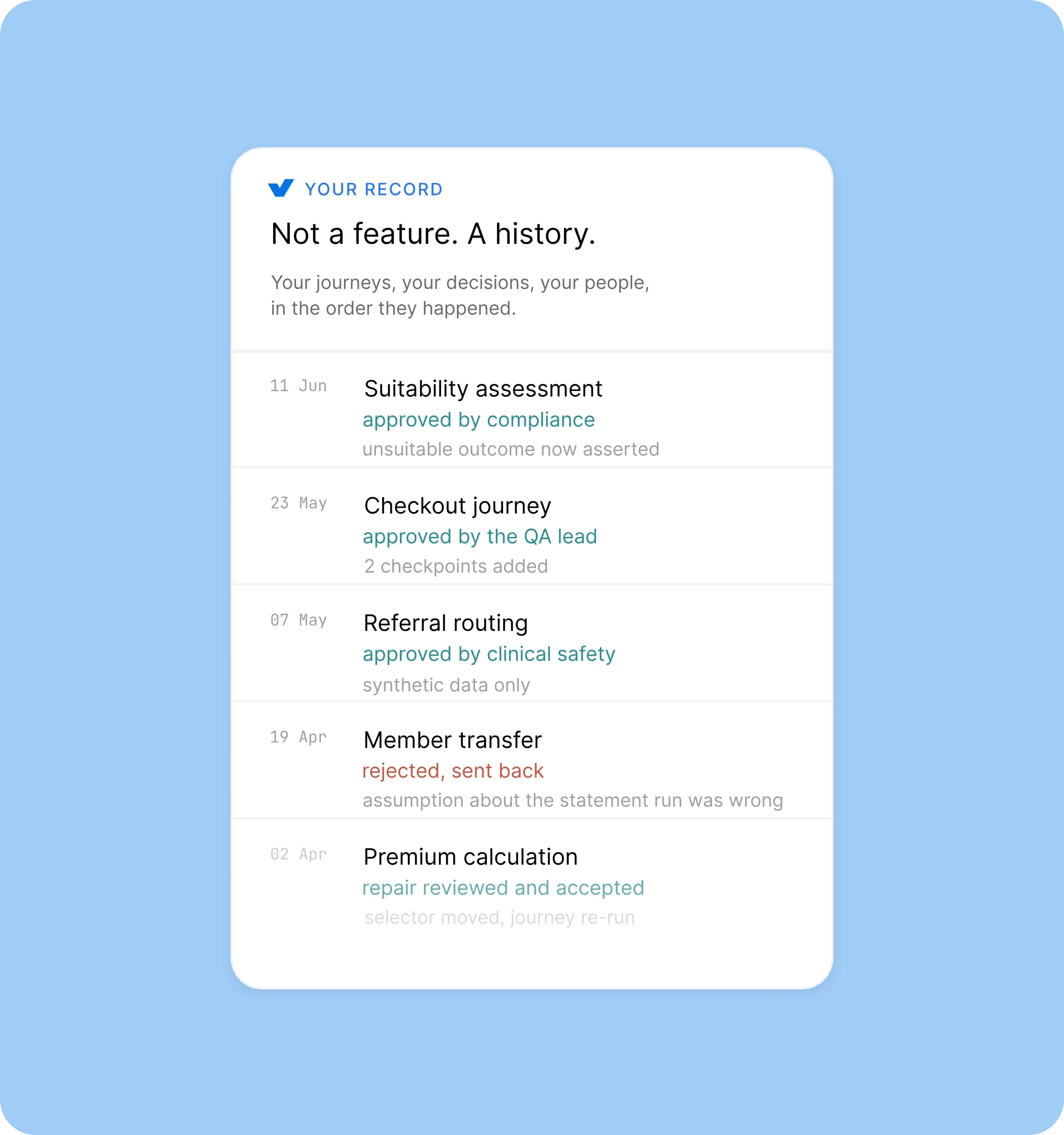
Version history, execution history and the chain from source to requirement to run.
Author from the requirements behind the test
Turn specifications, stories and process documentation into requirements and journeys written in plain English.
Explore Related Virtuoso QA Capabilities
Read the record a change leaves
Version history, execution history and the chain from source to requirement to run.
Author from the requirements behind the test
Turn specifications, stories and process documentation into requirements and journeys written in plain English.
Explore Related Virtuoso QA Capabilities
Read the record a change leaves
Version history, execution history and the chain from source to requirement to run.
Author from the requirements behind the test
Turn specifications, stories and process documentation into requirements and journeys written in plain English.
Al-native, proven in production.
10x
Faster execution
9x
Faster authoring
85%
Less maintenance
50%
Lower QA cost
Al-native, proven in production.
10x
Faster execution
9x
Faster authoring
85%
Less maintenance
50%
Lower QA cost
Al-native, proven in production.
10x
Faster execution
9x
Faster authoring
85%
Less maintenance
50%
Lower QA cost
Proven where quality and accountability matter
Recognized by independent analysts, trusted by enterprise teams, and built with the security controls required for critical software.

WAVE STRONG PERFORMER
Proven where quality and accountability matter
Recognized by independent analysts, trusted by enterprise teams, and built with the security controls required for critical software.
WAVE STRONG PERFORMER
Proven where quality and accountability matter
Recognized by independent analysts, trusted by enterprise teams, and built with the security controls required for critical software.
WAVE STRONG PERFORMER
Frequently Asked Questions
Questions about running approved journeys at scale, from what the engine executes to what it captures when a step fails.
Does an agent take part in a run?
Do we need to provision or maintain a grid?
How do I choose which browsers a journey runs on?
How do I run the same journey against another environment?
Can I run several journeys together as a suite?
Frequently Asked Questions
Questions about running approved journeys at scale, from what the engine executes to what it captures when a step fails.
Does an agent take part in a run?
Do we need to provision or maintain a grid?
How do I choose which browsers a journey runs on?
How do I run the same journey against another environment?
Can I run several journeys together as a suite?
Frequently Asked Questions
Questions about running approved journeys at scale, from what the engine executes to what it captures when a step fails.
Does an agent take part in a run?
Do we need to provision or maintain a grid?
How do I choose which browsers a journey runs on?
How do I run the same journey against another environment?
Can I run several journeys together as a suite?

See what your next release looks like with Virtuoso
Book a walkthrough on your applications and your workflows. Bring a requirement, a user journey, or a brittle Selenium script, and watch the loop run on something you recognise.
See what your next release looks like with Virtuoso
Book a walkthrough on your applications and your workflows. Bring a requirement, a user journey, or a brittle Selenium script, and watch the loop run on something you recognise.
See what your next release looks like with Virtuoso
Book a walkthrough on your applications and your workflows. Bring a requirement, a user journey, or a brittle Selenium script, and watch the loop run on something you recognise.
AICPA
SOC

WAVE STRONG PERFORMER
@ Copyright 2026 SpotQA, Creators of Virtuoso QA
AICPA
SOC
WAVE STRONG PERFORMER
@ Copyright 2026 SpotQA, Creators of Virtuoso QA
AICPA
SOC
WAVE STRONG PERFORMER
@ Copyright 2026 SpotQA, Creators of Virtuoso QA